



Who hasn't ever fallen short by just a few centimetres of reaching a hold, felt stiffness preventing movement, held their breath at exactly the wrong moment, or experienced a lack of concentration…?
I started climbing a few years after taking up yoga. The flexibility and strength it gave me helped make up for my lack of technique. As I improved my climbing level, I simultaneously developed my physical and philosophical yoga practice. Very quickly, I noticed similarities but above all the complementarity it brought to my climbing.
Grounding and balance
As we know, everything starts with the feet: finding the right placement, the right support and achieving balance. In yoga, grounding is a fundamental principle. Before any standing pose, and especially balance poses, you learn to feel the grounding, sense every part of your body, align it and engage the necessary muscles. Few people have a precise internal and spatial awareness of their body, and to achieve a pose, just as to reach the next hold, it is important to respect these steps.
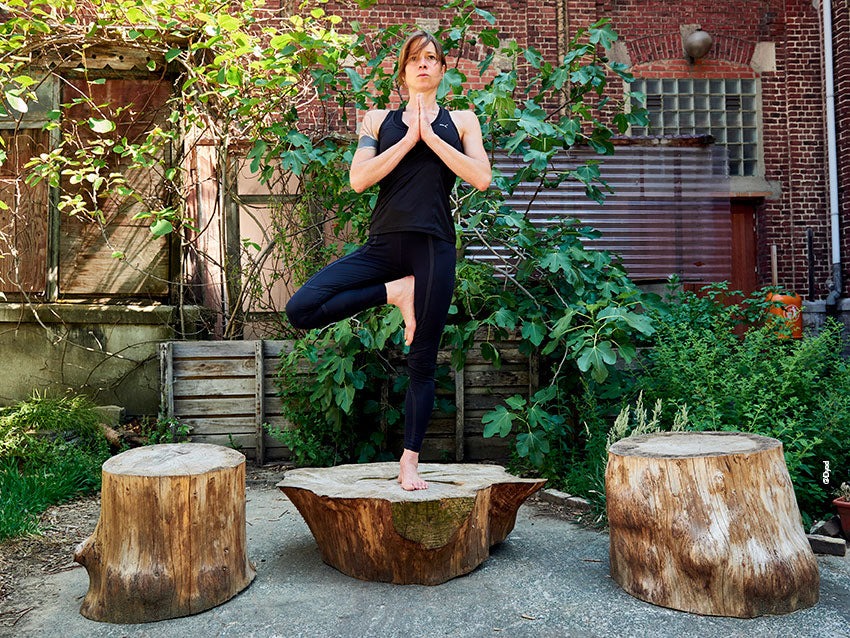
Flexibility and range of motion
Flexibility is the first benefit of yoga that comes to mind. And the good news is that it's absolutely true! How many times have I been grateful to yoga for this… Whether it's lifting a leg high, being able to stretch lengthways or sideways to gain those all-important centimetres, or making unlikely moves in energy-saving mode when I had nothing left, when you need to make THAT dynamic move…
I was more than a little proud on that route, where all my friends were watching me thinking "there's no way she'll pull that move off" — and then, with 2-3 slow, fluid movements, I breezed through it.
Muscle strengthening and core stability
Asanas (poses) involve as much stretching as muscle strengthening, which is useful in climbing — not only for building strength but also for protection and injury prevention. For example, Downward-Facing Dog (Adho mukha svanasana) is a "classic" pose practised regularly throughout a session; it strengthens the shoulders while opening them up (which we tend to close off when facing a wall); it also stretches the hamstrings (back of the thighs), and inversions (head lower than the heart) allow the heart to rest and the brain to receive better blood flow, bringing energy to the whole body…
As for planks, integrated several times throughout the session (starting with the Sun Salutation), there's no need to try to do them at home — especially when you never seem to stick with it anyway…
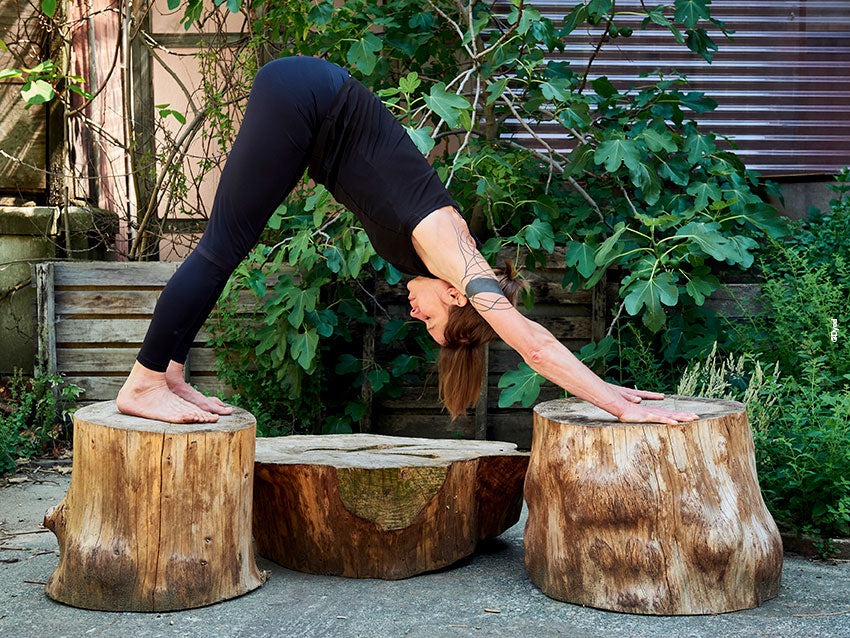 Adho Adho mukha svanasana – Downward-Facing Dog
Breathing
At first, it can seem a little difficult to get used to yoga breathing (pranayama), but mastering it has a real impact on performance. It allows you to push further in terms of endurance, strength, flexibility… By combining breathing with poses (or with movements in climbing), you deliver the oxygen your muscles need — a great tool for preventing that dreaded forearm pump from setting in too quickly.
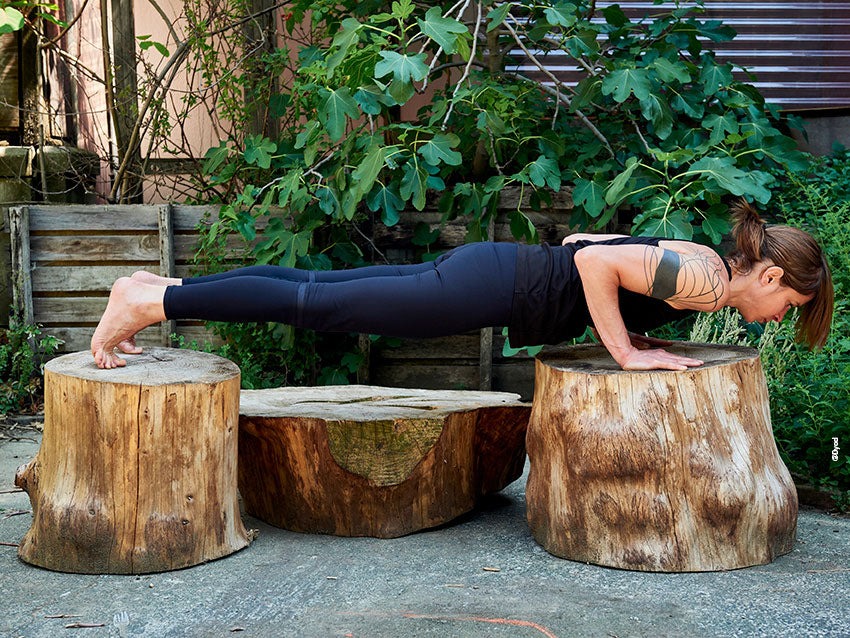 Chaturanga Dandasana – Four-Limbed Staff Pose
Concentration
It is essential. In climbing, when concentration is absent, you fall more easily, you read routes less well, foot and hand placements become less precise… In yoga, concentration isn't only used in balance poses — it's also used in static poses to hold the position, and in all other poses to focus on the breath. Training your concentration prevents you from being overwhelmed by thoughts and distractions, and calms the mind. It is the step before meditation — that state which can also be reached in climbing. Through yoga practice, you learn to access these states "on demand" and to experience moments of "complete presence."
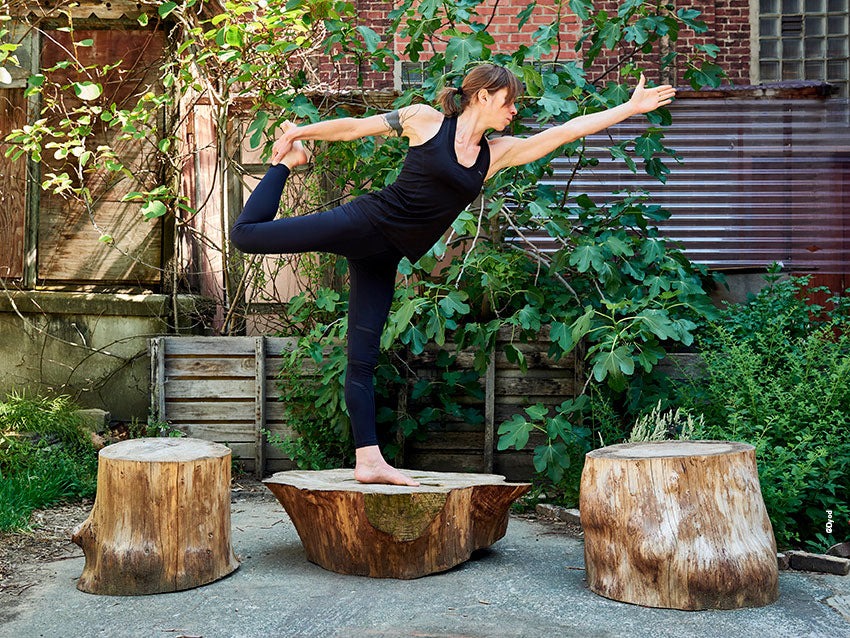 Natarajasana – The Dancer
Ethical values and moral disciplines
Yoga is not limited to poses (Asanas) — it has eight stages, or limbs (Ashtanga = 8 limbs). Asanas is the fourth limb; the first two limbs of yoga are Yamas (moral observances towards others) and Niyamas (personal rules of conduct towards oneself).
These are foundations that are clearly reflected in climbing: we rarely climb alone, and personal discipline is essential for progression. They can be developed further by studying and practising them through yoga. For instance, non-violence will help us to know and control our physical limits to avoid injury, while contentment can be useful for those who tend to get frustrated every time they fail…
These principles bring us humility and promote harmony with others and with ourselves.
When and how to practise?
Ideally every day, but our lives and climbing schedules don't always make that possible. However, it is clear that to reap the benefits, regular practice is needed — once a week is already a great start.
I have noticed that I climb better when I do a yoga session the day before (especially when I include hip-opening poses). Just before climbing, the Sun Salutation is perfect as a warm-up — it incorporates all the movements; you can do one slowly to stretch and wake up the muscles, followed by a faster one for a cardio warm-up.
Personally, I don't do intense stretching straight afterwards to avoid micro-tears — I opt for Child's Pose, releasing all the muscles, simply to relax them, and Downward-Facing Dog. Sometimes one or two other poses, but always slowly and gently.
And I do another yoga session the following day or a few hours later for recovery and to ease any stiffness.
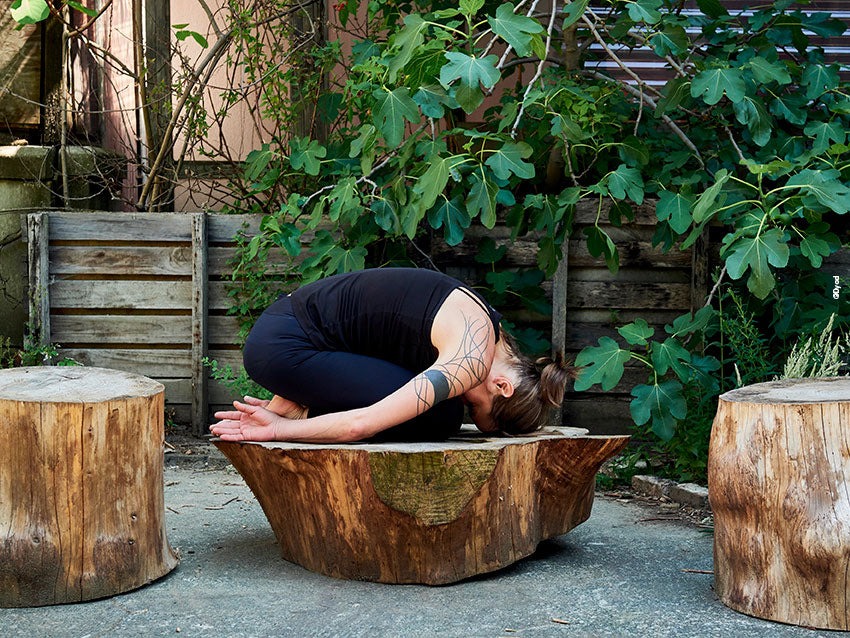 Balasana – Child's Pose
The added bonus…
I no longer dread time off due to injury or other reasons — and especially the return to climbing. By replacing climbing sessions with yoga, I don't lose my level at all when I get back on the wall.
The best part…
It simply feels great!
If you have never practised or have little experience, it is better to take classes in order to understand the essence of each pose — a few centimetres, or even a few millimetres, can be enough to be "outside" the pose. There is also a sequence to follow, as certain poses require counter-poses. Sure, there are good tutorials online, but YouTube won't correct you.
In short, to take your climbing to the next level, replace one climbing session with a yoga session… It may seem unthinkable to some, but the effects will certainly be felt… Give it a try…
Photos by Yves Dethier - Dyod photography at Itinéraires AMO (Saint-Gilles, Brussels)
Thanks God, I'm a Yogini !