



It has happened, it was inevitable in a way, we had almost come to expect it after watching him defy nature, redefine alpinism, push the limits of the human body through one extraordinary mountain achievement after another, each more extreme than the last. Ueli Steck, "The Swiss Machine," died on April 30, 2017 at the foot of Everest, where he had come to attempt yet another extraordinary project.
The man has entered (if he wasn't already there) into legend. Past the shock and sadness of an event like this, certain questions gradually come to mind. The first that occurred to me was "Why?" Why did he do this? Why expose himself to such risks? Why defy nature to such an extent?
And us...
And why, each at our own level, do we do this? What drives us to climb? To grab a pair of crampons and ice axes and ascend an ice fall or a summit in the Alps? Why can't we stop ourselves from running a trail in the Ardennes? Why do we train all year in climbing gyms hoping to complete our project at Freyr or on a cliff in a sunnier country?
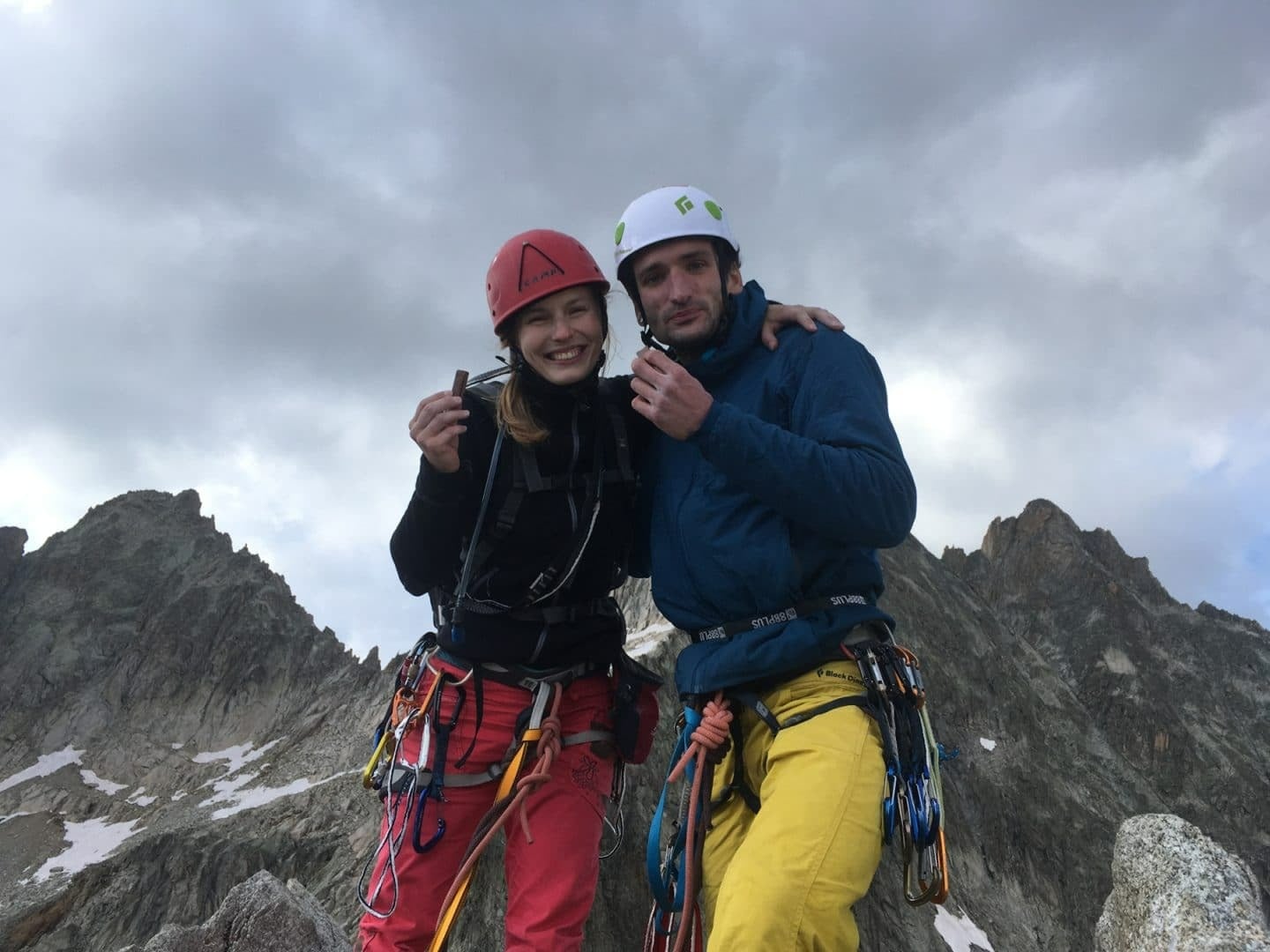
Reflections
A climber for several years, I was immediately infected by the bug and very quickly, climbing became a central axis around which the rest of my life revolves — my work, my friends, family, holidays, free time. Gradually, my gym training sessions went from one to two times a week to four to six times a week, guided for the past few months by a great coach so that every session, every free moment is planned and optimized to help me progress, become stronger, always push my limits... But why?
Talking with my friends, whether mountaineers or climbers, beginners or experienced, amateurs or professionals, everyone offers their own explanation, their more or less philosophical reflection, their own little idea.
To each their own interpretation
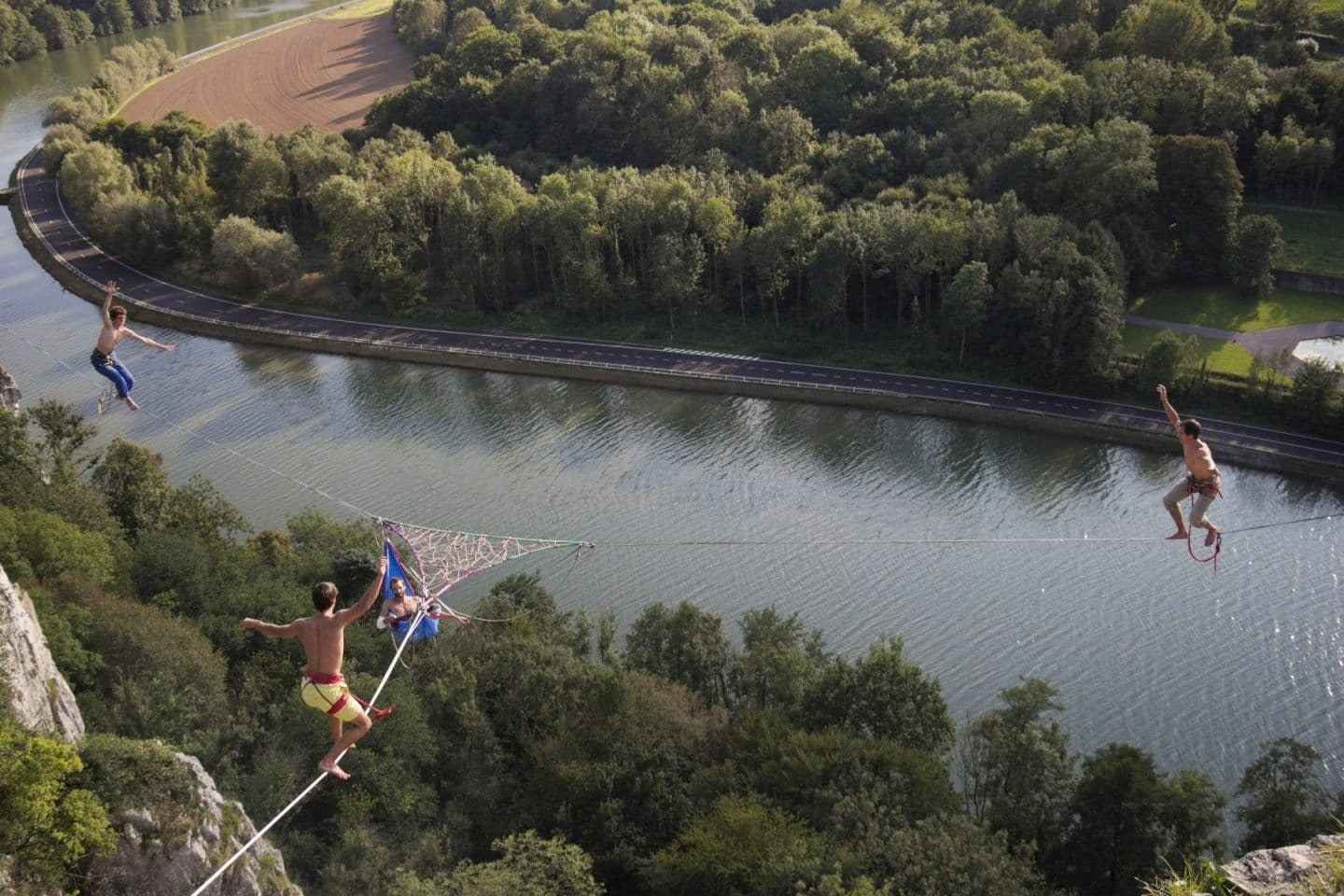
One answer that comes up often is the social role of climbing — from gym sessions with friends at the end of the day to rock trips to Kalymnos, via crag days at Freyr or mountain adventures in Chamonix. You could almost say we climb purely as an excuse to grab a beer with friends after a day on the cliff or a gym session!
Speaking of friends, one of mine, freshly back from Patagonia where he took part in freeing an aid route, told me that after more than 15 days on the wall, suffering through harsh conditions, rationing water and food, one thing had driven them to keep going despite everything: fun! Hanging 1000m above the ground, losing weight before their eyes, they kept on having a good time (and dieting) and that was the decisive factor in choosing to keep trying and ultimately freeing a new extreme big wall route at Torres del Paine.
Hard to believe, but these guys genuinely have fun in every situation. Meanwhile, another big wall enthusiast climbs more for the freedom he feels — when lost in the middle of a face, alone with his partner, the vast space opening up around him overwhelms him and gives him that intense feeling of freedom he finds nowhere else.
Pleasure and labels
An interesting concept that was shared with me, and which I think is a truly beautiful reason to climb and push yourself, is that of "shared success." It means that when, after all our repeated attempts, we finally reach the summit, finally "clip the chains" on our project, joy washes over us — but also over our belayer, the friends below, and perhaps even the other climbers who happened to be passing by and stopped for a few moments to watch us send the hardest route we had ever climbed.
Speaking of grades and the climber's label — even if we find it a little hard to admit, because climbers are a wonderful community, united, good-spirited, making no distinctions based on anyone's level, etc. — we're all still drooling over the first "strong climber" who walks by. And let's also admit it: at whatever level we're at, being recognized by others as a "strong climber" every now and then does wonders for the ego! So why not climb and train a little for that too? To earn your label, your "strong climber" badge.
Wisdom
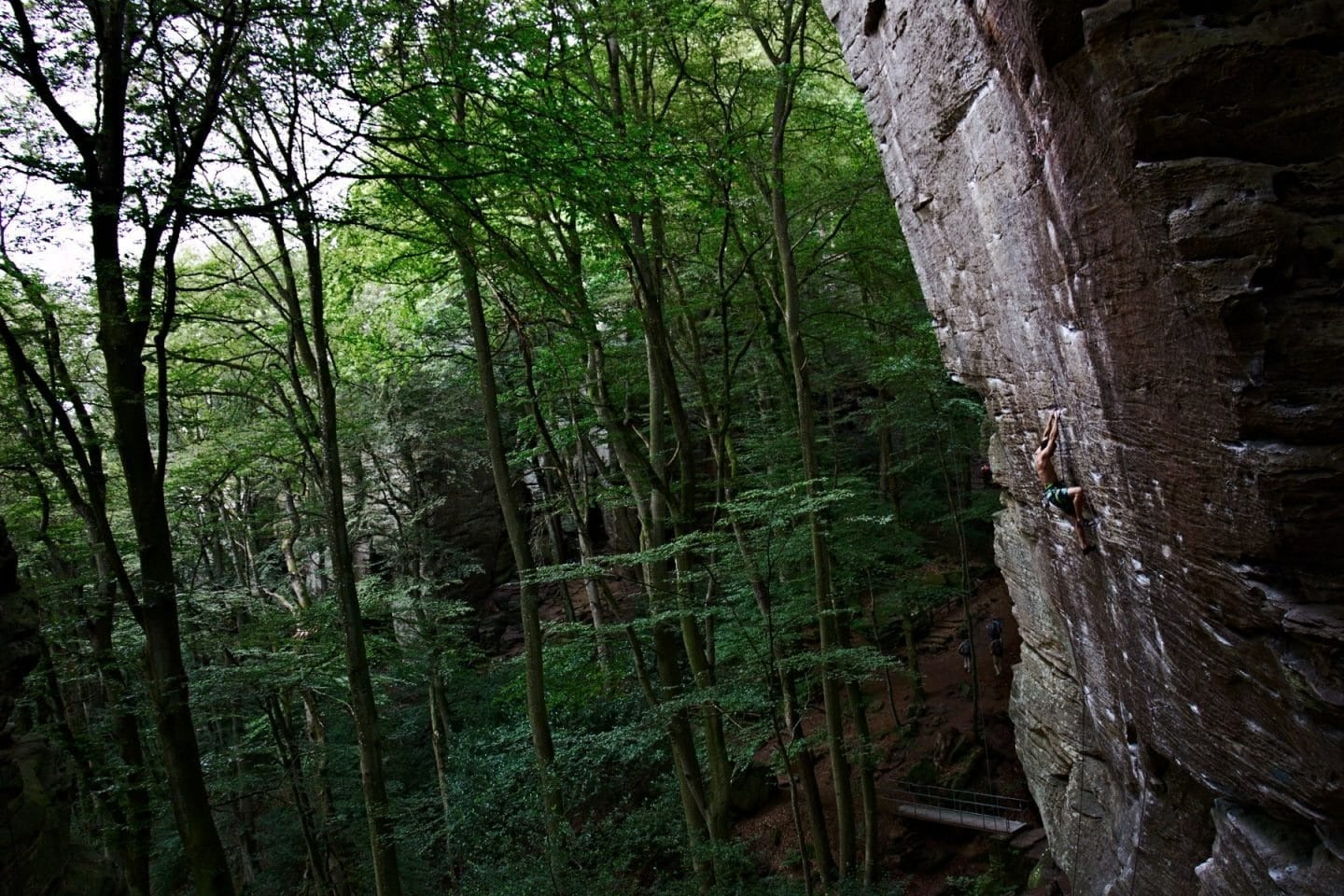
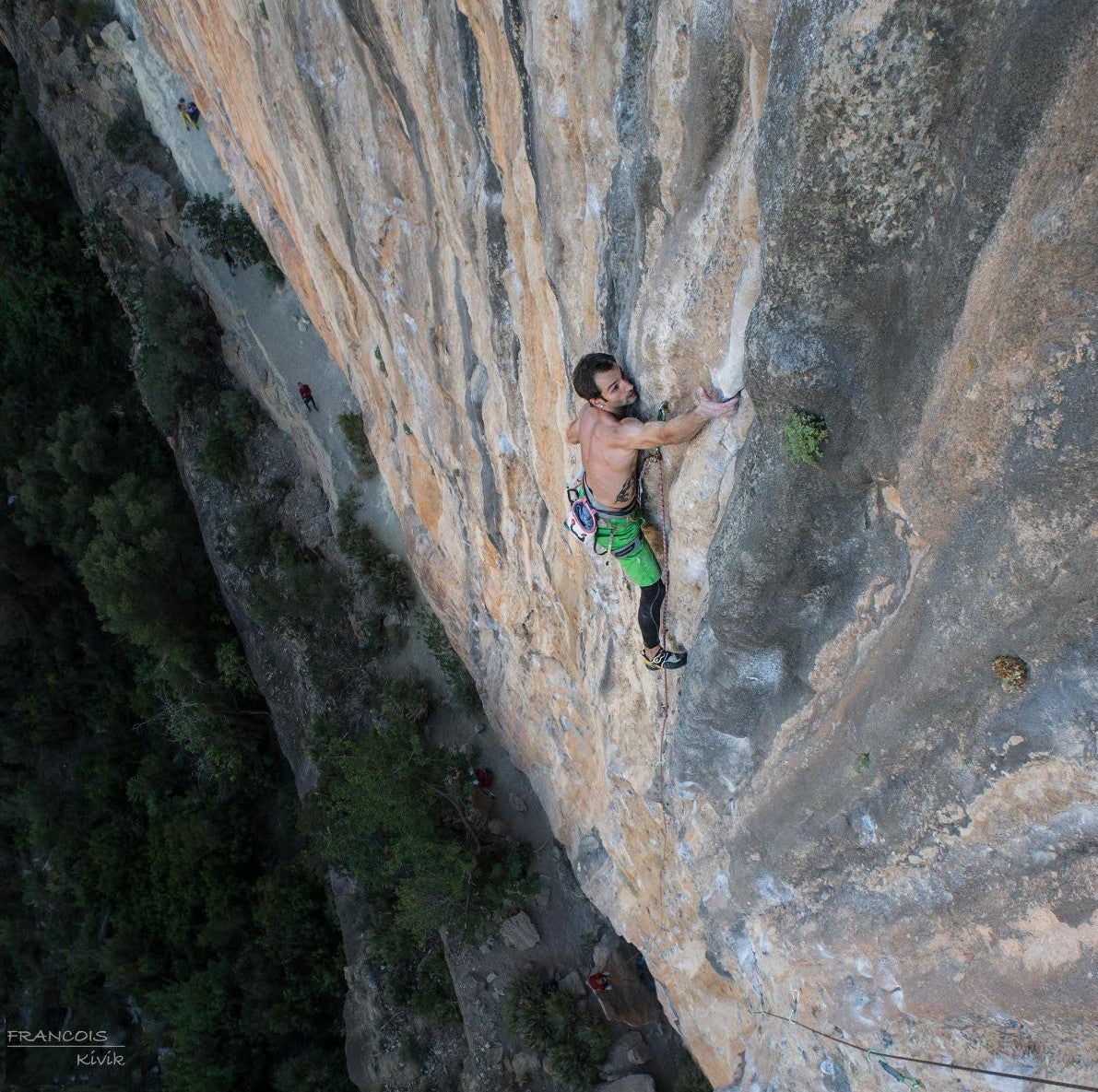
In contrast to this need for recognition, a friend who has been climbing at Freyr since the Freyr prehistory — or nearly (sorry Thierry) — spoke to me about the pleasure of being in nature, in beautiful places, but also about the beauty of movement in climbing. He climbed partly for the beauty of the gesture, and climbing gave him a kind of pleasure rooted in the moment, in the present, with no distinction made based on the grade of the route. A magnificent move on a 6a gives him as much pleasure as a precarious balance on a slipping foot, 5m above the last bolt on an 8a!
Others have mentioned the pleasure of becoming aware of your body through the grip on a hold, the texture felt beneath the rubber of your climbing shoe, the almost sensual relationship that can exist between the climber, their body and the rock on which they move, brush, crawl, climb...
So then — for freedom, for friends, for fun, for the love of nature, for discovering places more magnificent than the last, for your "strong climber" label, for the beauty of movement, or even for the intimate connection with the rock?
As for me, honestly, I have no idea — probably a little of all of that, and probably another 1001 reasons drive me to climb, train, commit, to push myself again and again, to keep pushing my limits.
And you? Why do you climb?
The mystical art of the climber