



The Matterhorn is one of the most mythical summits in the Alps. At 4,478 metres above sea level, this ascent fascinates as much as it impresses. But behind the iconic image lies a demanding, technical and committing route, where every detail matters — including the choice of equipment.
At Lecomte Alpirando, we support mountaineers every year who are preparing for this type of project.
To go further, we worked with Explore-Share and a UIAGM guide who has completed more than 150 successful ascents of the Matterhorn to put together an equipment list based on the reality of the terrain.
Quick checklist: essential equipment for the Matterhorn
Technical equipment
- B2 mountaineering boots
- Steel crampons
- Ice axe
- Harness
- Helmet
Clothing
- Complete layering system
- Mountaineering trousers
Essentials
- 28-30L backpack
- 2 pairs of gloves
- Glacier glasses
- Headlamp
- Hydration system ( ~3L)
- Sleeping bag liner
On the Matterhorn, the goal is not only to have high-performance equipment. Above all, you need gear that allows you to move quickly, precisely and without unnecessary energy loss.
All of this equipment is available on our webshop or directly in store, where our experts will advise you based on your project.
Why the right equipment is crucial
The Matterhorn is not an "easy" summit.
You need to be able to:
- move quickly and efficiently
- be precise on rock
- manage changing conditions
- sustain a long day at altitude
Ill-suited equipment can:
- slow your progress
- increase your level of fatigue
- reduce your safety
- compromise your ascent
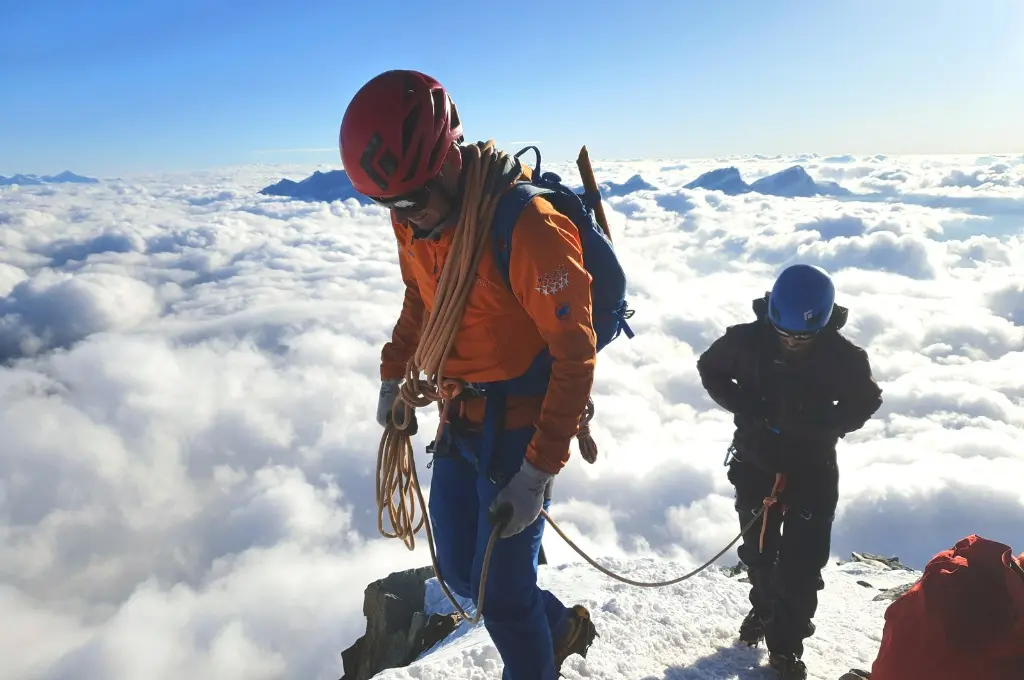
The 3 most common equipment mistakes
« The Matterhorn is not the place to test new gear. »
1. Setting off with untested or too-heavy boots
Between loss of precision and discomfort, even good boots become a problem if they haven't been properly broken in.
2. Bringing only one pair of gloves
Moisture, cold, perspiration: having a second pair often makes all the difference to your day.
3. Overloading your pack
Every kilogram counts on technical sections. Overloading causes significant fatigue and throws off your balance.
On the Matterhorn, minimalism is a real advantage.
Choosing your equipment wisely
Mountaineering boots
« Many mountaineers arrive with new or too-heavy boots, which quickly becomes a problem during the ascent. »
The guide's advice:
Opt for B2 crampon-compatible boots, already tested in the field.
To check before departure:
- Perfect fit
- No pressure points
- Good precision on rock
To avoid:
Brand-new boots on the day of the ascent.
Discover our mountaineering boots
Crampons
The guide's advice:
Opt for steel crampons, more versatile and more reliable on mixed terrain.
To check before departure:
- Perfect compatibility with your boots
- Reliable binding system
To avoid:
Aluminium crampons, less suited to rock and mixed terrain.
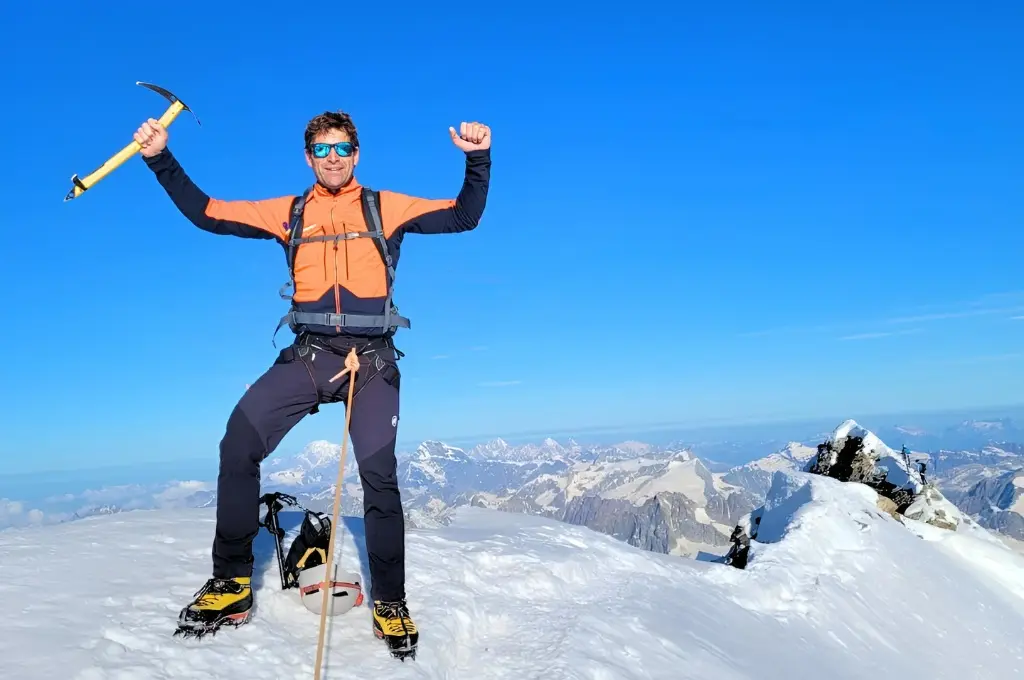
Ice axe
« When the ice axe is not in use, it is best stored inside the pack. »
The guide's advice:
A classic ice axe of 50 to 60 cm is more than sufficient for an ascent like the Matterhorn.
To check before departure:
- Lightweight
- Good grip and manoeuvrability
- Length suited to your build
To avoid:
Choosing a model that is too heavy or too technical for the intended use.
Backpack
« A pack that is too heavy slows your progress, causes greater fatigue and reduces precision on technical sections. »
The guide's advice:
Opt for a 28 to 30 litre pack, light and stable enough to move efficiently along the route.
To check before departure:
- Good stability when moving
- Lightweight
- Simple and accessible organisation
Field tip:
- Aim for a maximum of 4–5 kg (water included)
- Keep everything inside the pack
Discover our mountaineering packs
Technical clothing
« Conditions can change rapidly at altitude, even when the weather appears stable at the start. »
The guide's advice:
Adopt a 3 to 4 layer system that allows you to easily adapt your protection to the conditions encountered.
To check before departure:
- Good breathability
- Protection against wind and precipitation
- Adjustable insulation
Field tip:
Layering choices are made the evening before or on the morning itself, based on real conditions, not just the weather forecast.
Gloves
The guide's advice:
Bring a thin pair and a warm pair to maintain both dexterity and adequate thermal protection.
To check before departure:
- Good grip on equipment
- Protection suited to expected temperatures
Headlamp
The guide's advice:
Choose a headlamp with a comfortable battery life and a secure attachment to the helmet.
To avoid:
A lamp that is too weak... or too powerful, to the point of dazzling other mountaineers.
Hydration
The guide's advice:
Bring approximately 3 litres of water and opt for a hydration bladder so you can drink easily without having to stop. A hydration bladder is ideal on technical sections or when there are many people on the route.
Sleeping bag liner
The guide's advice:
Bring a lightweight and compact sleeping bag liner, essential in the majority of alpine huts.
Discover our sleeping bag liners
Preparation: beyond equipment
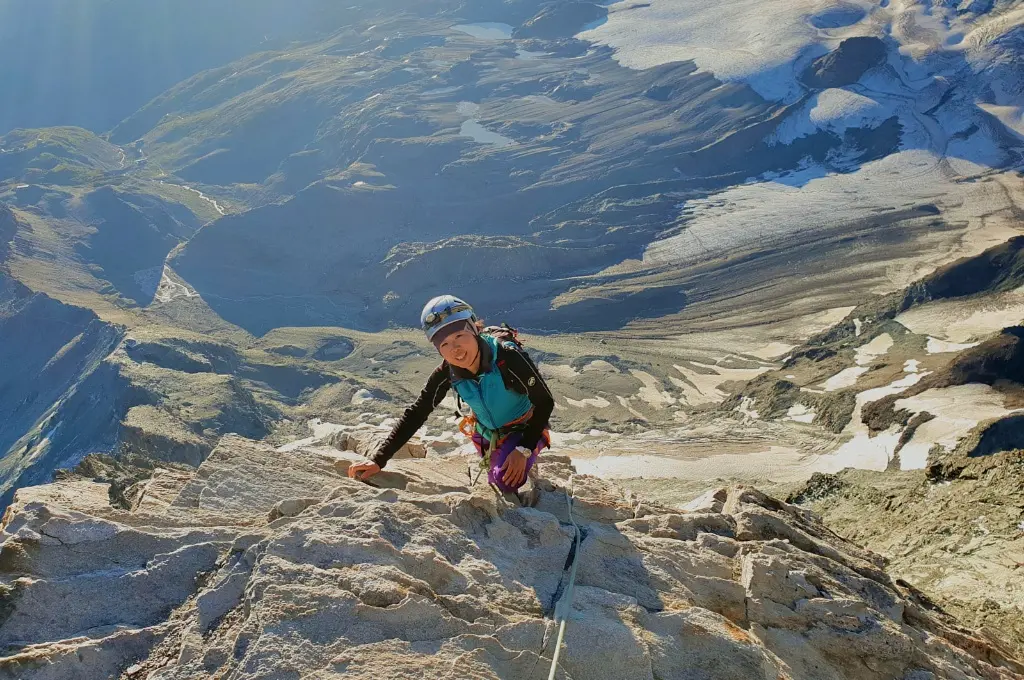
« Most attempts fail not because of equipment, but due to a lack of acclimatisation, physical fitness or confidence on rock. »
It is often here that the success — or failure — of an ascent is decided.
This is probably the most common mistake on the Matterhorn: underestimating overall preparation.
Even with excellent equipment, three elements remain essential:
- physical fitness
- technical level (climbing / mountaineering)
- acclimatisation
Our recommendations
- Spend 3 to 5 days at altitude beforehand
- Test your equipment
Ideally, every important piece of gear should already have been used in real conditions before the ascent - Stay flexible
Good to know
Many mountaineers choose to prepare their ascent with a certified UIAGM guide, particularly to:
- validate their level
- test their equipment
- maximise their chances of success
This can be arranged via Explore-Share.
A project that takes preparation
The Matterhorn is a demanding adventure, but achievable with the right preparation.
Being well equipped means:
- gaining in safety
- saving energy
- moving with confidence
but also getting more out of the experience, with greater peace of mind and confidence throughout the ascent.
And for those who wish to go further, you can organise your Matterhorn ascent with a certified guide via Explore-Share.
Conclusion
The Matterhorn leaves no room for improvisation and is one of those summits that leaves a lasting mark on a mountaineer's life.
The right equipment, combined with thorough preparation, does not guarantee the summit but makes all the difference between a difficult attempt… and a successful ascent.

With more than 150 successful ascents of the Matterhorn, Tobias knows this mountain in its finest details. A UIAGM high mountain guide with a passion for mountains and nature, he has been guiding mountaineers on the finest summits of the Alps for many years. Through this article, he shares his field experience, the most common mistakes observed on the Matterhorn, and the equipment he genuinely recommends to his clients. Tobias is a member of the Explore-Share community.

Gearing up for the Matterhorn: guide advice and field expertise (copy)