



Proper care of hiking boots determines their lifespan and your comfort. A poorly maintained pair becomes heavier, breathes less and tires your feet. The problem appears quickly. Dried mud, hardening leather, water-saturated fabric, membrane that doesn't breathe properly.
The solution comes down to one simple rule: adapt care to the material. Smooth leather, nubuck, synthetic or leather with a Gore-Tex membrane do not accept the same products or the same techniques.
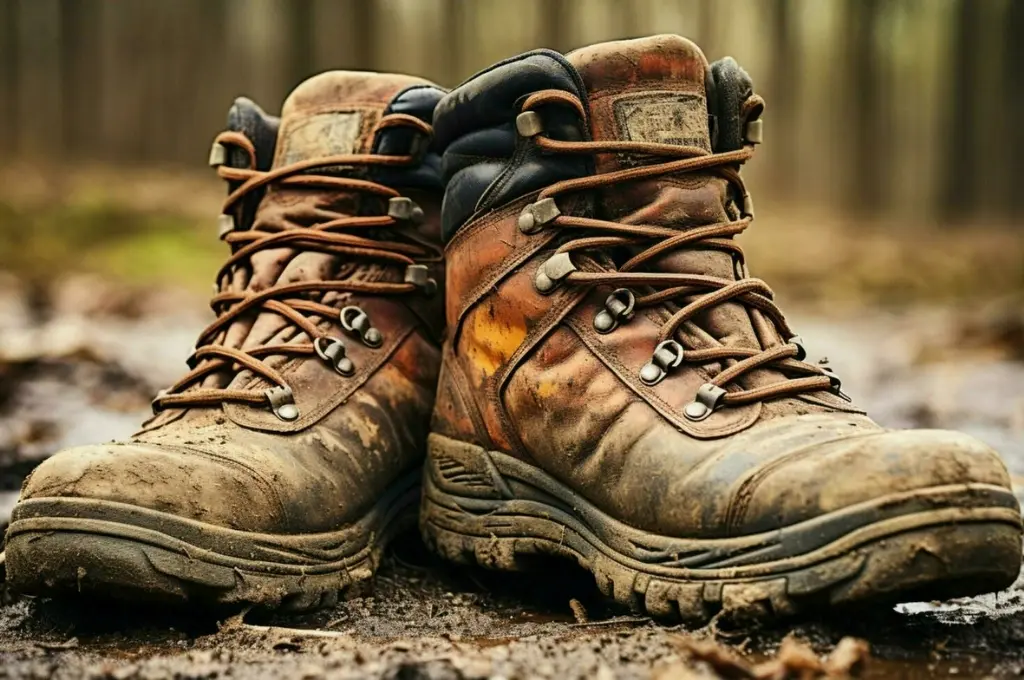
Identify the construction before taking action
Look at the upper. It dictates everything.
Four cases dominate the market:
| Construction | Appearance | What needs to be preserved | Suitable treatment |
| Smooth leather without membrane | dense surface, sometimes shiny | flexibility and water resistance | wax or light grease |
| Nubuck / suede | matte, velvety | breathability and texture | water-repellent spray |
| Outer leather + membrane (Gore-Tex) | leather or nubuck + internal lining | balance between protection / breathability | spray or light cream |
| Synthetic (with or without membrane) | mesh, textile | lightness and quick drying | cleaning + spray |
Unsure about your pair? Check the hiking boots category.
Cleaning your hiking boots without damaging them
A dirty boot wears out faster. Particles act like sandpaper.
Start dry. Brush off the mud. Then move on to lukewarm water with a soft brush. Pay particular attention to the folds at the toe and the tongue gusset. This is where mud compacts and accelerates stitching wear.
Avoid powerful jets. They push dirt deeper in. Use a specialist soap if necessary. Standard detergents destroy water-repellent treatments.
A clean after each muddy outing is enough to prevent premature wear.
Drying: never cut this step short
Poor drying distorts the boot.
No radiator. No fire. Direct heat stiffens leather and weakens adhesives.
Proceed as follows:
- leave to dry at room temperature
- add absorbent paper or newspaper
Allow up to 48 hours. A boot that is still damp should not be treated, unless the chosen product recommends it.
Smooth leather without membrane: nourish just enough
Full-grain leather loses its natural oils. Without care, it hardens.
Apply a wax or grease in a thin layer. Work the product into the folds. Remove any excess.
Stay measured. Too much grease softens the support. In wet conditions, one application every 3 to 5 outings is sufficient.
Brands like Scarpa or La Sportiva use this type of leather on technical models.
Nubuck and suede: protect without suffocating
Nubuck should not be greased. The fibre becomes clogged and the boot breathes less.
Brush dry. Clean if necessary. Apply a water-repellent spray.
The finish remains matte and velvety. This is the normal behaviour of the material.
Leather + Gore-Tex membrane: the critical point
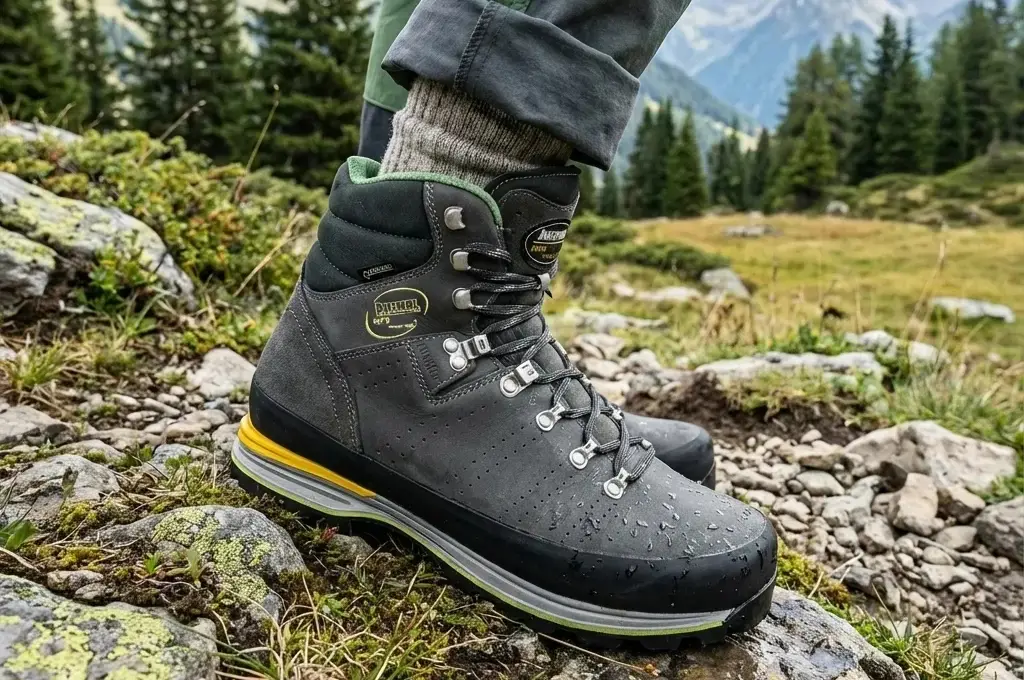
This is where mistakes prove costly.
A leather + membrane boot combines two logics:
- outer leather exposed to water
- internal membrane that manages moisture
If the leather becomes saturated with water or grease, the boot breathes poorly. The foot becomes damp without any actual leak.
The right approach
Work with precision:
- membrane-compatible water-repellent spray
- light cream if the leather dries out
- application on a clean and dry boot
You protect the leather without blocking air circulation.
What to avoid
- thick greases such as alpine leather grease
- repeated applications that are too heavy
- products not compatible with membranes
Boots with membrane: preserving breathability
A breathable waterproof membrane works through microscopic pores. They allow water vapour to pass through.
Dirt blocks them. Result: internal condensation.
Clean regularly. Apply an external water-repellent treatment. The membrane remains effective only if the exterior does not become saturated.
Synthetic: simple but not without upkeep
Synthetic dries quickly. It does not need nourishing.
Clean regularly. Dry in open air. Apply a water-repellent spray if necessary.
These boots remain suitable for quick outings and summer conditions.
Waterproofing: restoring water repellency
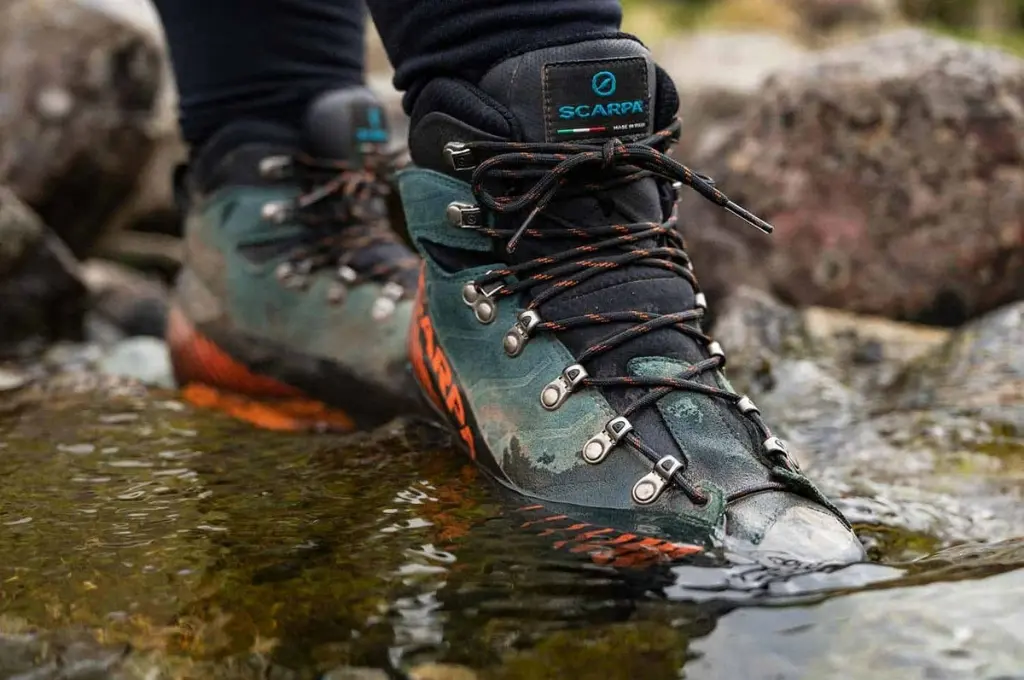
Waterproofing primarily means preventing water from penetrating the outer material.
Choose according to the upper:
- spray for nubuck and synthetic
- wax for smooth leather
- spray or light cream for leather + membrane
Always apply to a clean and dry boot.
The International Climbing and Mountaineering Federation emphasises the importance of regular maintenance to preserve performance.
Mistakes that shorten lifespan
Avoid these mistakes:
- drying on or near a heat source
- machine washing
- greasing nubuck
- overloading grease on leather + GTX
- storing while damp
A well-maintained boot lasts several seasons. Mistreated, it loses its qualities quickly.
A simple and effective routine
Keep a clear logic:
- clean after a muddy outing
- dry completely
- apply treatment suited to the material
Store your boots in a dry place.
Hiking boot care relies on consistent practice. Each material demands its own method. Respect it and your boot will retain its comfort, support and reliability on the trail.
A hiking boot care kit simplifies these steps.
FAQ
How do you care for a leather boot with Gore-Tex?
Clean, dry completely, then apply a membrane-compatible water-repellent spray or a light cream. Avoid thick greases. They limit breathability and slow down drying.
Why do my Gore-Tex boots feel damp inside?
Often, the membrane is still functioning, but the outer fabric is saturated with water. Water vapour can no longer escape properly. Cleaning and water-repellent treatment will correct this.
Can all leather boots be greased?
No. Nubuck and leathers with membranes require light treatments. Only smooth leather without a membrane accepts standard grease.
How often should you maintain your boots?
After every muddy outing for cleaning.
For treatments, observe the material: as soon as water no longer beads off or the leather dries out.
Does waterproofing spray replace a membrane?
No. It improves external water repellency. The membrane remains responsible for overall waterproofing.

How to take care of your hiking shoes?