



A blister can turn a pleasant outing into an ordeal within the first few kilometres. The problem rarely starts suddenly. A slight heat appears under the heel or forefoot. Then the skin gets hotter with each step. Once a blister has formed, the pain persists until you return.
Blisters while hiking affect all types of walkers. Beginners, regular trekkers or experienced trail runners. An ill-fitting shoe, a wet foot or an unsuitable sock are all it takes.
The right reflex is to act before the blister forms. Afterwards, it's already too late.
Why do blisters appear?
A blister forms when repeated friction gradually separates the superficial layers of the skin. A clear fluid then fills this protective pocket. The pain appears mainly when pressure continues.
Heat accelerates the process. So does moisture. A sweaty foot slides more inside the shoe. The skin softens. Friction increases.
The most commonly affected areas are:
- the heel;
- the toes;
- the forefoot;
- the Achilles tendon;
- the sides of the foot on sloped terrain.
According to recommendations from the Fédération française de randonnée pédestre and several field guides from the FFME, blisters often result from a combination of details: shoes that are too large, wet socks, imprecise lacing or toenails that are too long.
Ill-fitting footwear remains the primary cause
The terrain isn't always to blame. The fit of the shoe often is.
A shoe that is too wide allows the foot to move with each step. A shoe that is too tight creates permanent pressure points. When descending, the foot shifts forward. The toes then rub against the shell and the sock.
A new model also requires a break-in period. Even a flexible upper can cause hot spots during the first outings.
To limit friction:
| Element | Good fit | Poor fit |
| Heel | Stable when walking | Lifts slightly |
| Toes | Can move freely | Touch the front |
| Instep | Even hold | Localised compression |
| Descent | Foot stable | Slides forward |
A suitable hiking model already eliminates a large part of the problem. There's no point choosing a rigid mountaineering boot for a day hike in the Ardennes. Too much rigidity sometimes increases friction points.
Socks matter almost as much as shoes
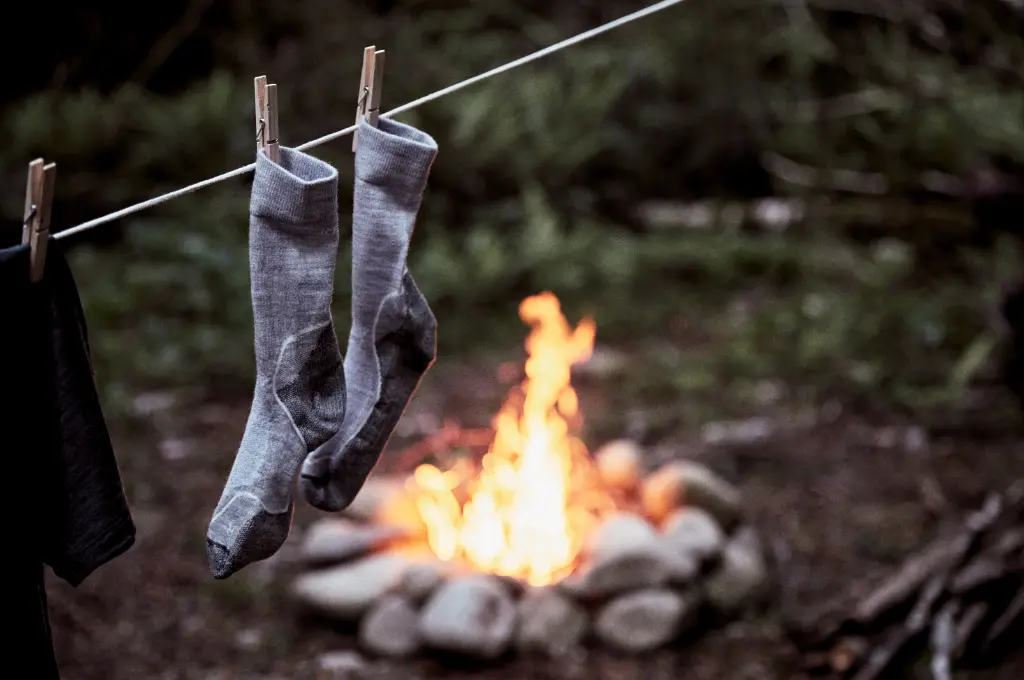
Cotton absorbs moisture and dries slowly. The result: the skin stays wet for hours.
Technical socks instead use:
- merino wool to limit thermal variations;
- polyamide for durability;
- elastane for support.
A good sock reduces bunching and limits internal foot movement. On a warm day, this already makes a significant difference.
Double socks still work for some long-distance hikers. The principle is simple: friction occurs between the two textile layers rather than directly on the skin.
For a standard hike, a medium-thickness technical pair is more than sufficient. A sock that is too thick fills the shoe more and can sometimes increase compression.
A pair of hiking socks must stay in place without cutting off circulation. If the sock rotates inside the shoe, blisters often follow quickly.
The hot spot: the moment to stop
A blister never appears without warning. Before the blister, the skin heats up.
Many people continue walking despite this sensation. A bad calculation. Ten minutes later, the skin is already beginning to separate.
At the first sign of heat:
- remove the shoe;
- dry the foot;
- adjust the lacing;
- apply protection immediately.
Hydrocolloid dressings act like a second skin. They reduce friction and absorb local pressure. Technical adhesive tape used in trekking often holds better in the rain or during a long, hot day.
A small kit is more than enough:
- hydrocolloid dressings;
- strong adhesive tape;
- gauze pads;
- compact antiseptic;
- sterile needle.
A lightweight hiking first aid kit already covers these needs without weighing down your pack.
Should you pierce a blister?
A small intact blister naturally protects the skin. It is generally best to leave it closed.
A large, painful blister can however become difficult to tolerate over several hours of walking. In this case, several first aid and sports medicine organisations recommend a simple method:
- disinfect the area;
- use a sterile needle;
- pierce from the side;
- gently drain the fluid;
- keep the skin intact;
- then protect with a clean dressing.
The Club Alpin Suisse also points out that tearing off the skin slows healing and increases the risk of infection.
If the blister becomes red, warm or painful at rest, watch for a possible infection.
Moisture and long descents: the classic combination
Long descents cause more blisters than ascents. The foot constantly shifts forward in the shoe. The toes and heel absorb the friction.
Moisture makes the situation even worse. After several hours in the rain or with heavy perspiration, the skin becomes more fragile.
A few simple habits significantly reduce the risk:
- change socks during a break;
- air out the feet for a few minutes;
- remove grit immediately;
- tighten lacing before descents;
- keep toenails trimmed short.
A five-minute break can sometimes prevent several days of pain.
The most common mistakes before a trek
Setting off in new shoes
This is probably the most common mistake.
Even a comfortable shoe in the shop needs to be broken in gradually. The foot must adapt to the internal volume, the seams and the support.
Before a multi-day hike, plan for:
- a few daily commutes;
- a short outing;
- a hilly walk;
- an outing with a loaded pack.
Testing a new lacing technique on the day of departure
A change in lacing significantly alters heel hold and pressure points. Some systems tighten the instep more. Others allow too much freedom on descents.
These adjustments should be tested before the outing. Not in the car park at the trailhead.
Neglecting wet feet
After crossing a stream or a warm day, feet should be dried as soon as possible. Wet skin becomes fragile quickly.
On long-distance routes, some hikers change their socks during the day. This isn't about comfort. It's about prevention.
Anti-friction cream, talc or tape: what actually works?
No single solution works in every situation. The terrain, the weather and the shape of the foot change a great deal.
| Solution | Main benefit | Limitation |
| Anti-friction cream | Reduces hot spots | Less effective in high humidity |
| Talc | Keeps the foot dry at the start | Temporary effect |
| Technical adhesive tape | Lasting protection | Requires precise application |
| Hydrocolloid dressing | Provides rapid relief | Holds less well on wet skin |
| Double sock | Reduces friction | Requires more space in the shoe |
In the majority of cases, the winning combination remains simple: well-fitted shoes, technical socks and immediate treatment of any hot spot.
When a blister becomes a real problem
A small blister makes walking uncomfortable. An infected blister can bring you to a complete standstill.
Over several days of trekking, pain under the foot naturally alters the way you walk. This can then sometimes lead to knee, hip or lower back pain.
Watch out for:
- extensive redness;
- significant localised heat;
- pus;
- a throbbing pain;
- fever.
In such cases, it is best to stop the hike and consult a healthcare professional.
Good habits are worth more than expensive equipment
Blisters while hiking will never disappear entirely. However, they become rare when good habits are in place.
An experienced hiker knows their sensitive areas above all. They adjust their lacing before a long descent. They stop at the first sign of heat. They keep their feet as dry as possible.
Equipment helps. Attention to detail makes the difference.
FAQ
How do you prevent blisters while hiking?
The most effective approach remains a simple combination: well-fitted shoes, technical socks and an immediate response to the slightest hot spot. A quick stop to protect a hot spot often prevents a full blister from forming.
Should you pierce a blister on your foot?
A small intact blister should generally be left closed. If it becomes large and painful, you can drain it with a sterile needle after disinfection. The skin should remain in place to protect the area.
Are cotton socks suitable for hiking?
No. Cotton retains moisture strongly and dries slowly. The skin then becomes more vulnerable to friction. Technical fibres or merino wool are better suited for walking.
Why do I get blisters even with good shoes?
Even a good shoe can cause friction if the lacing is poor, if the socks slip or if the foot stays wet for several hours.
What dressing should you use for blisters?
Hydrocolloid dressings remain the most widely used in hiking. They protect the skin and reduce friction. Technical adhesive tape sometimes holds better on wet terrain or during prolonged effort.

Blisters while hiking: the right reflexes can make all the difference